

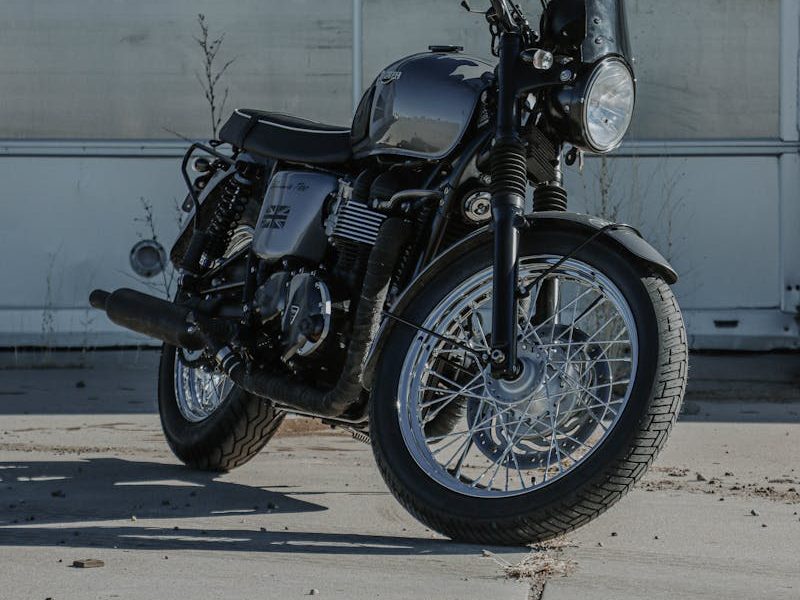
When customizing a café racer motorcycle, selecting the appropriate wheel type is pivotal to achieving both the desired aesthetic and performance. The two primary options—spoked wheels and cast (alloy) wheels—each offer distinct advantages and disadvantages. Understanding these can help you make an informed decision that aligns with your riding style and customization goals.
Spoked Wheels
Advantages:
- Durability and Flexibility: Spoked wheels are renowned for their resilience, especially on uneven terrains. The individual steel spokes can absorb significant impacts by flexing, which helps prevent wheel deformation when encountering potholes or obstacles. This flexibility makes them particularly suitable for off-road conditions and rough surfaces.
- Repairability: In the event of damage, spoked wheels offer the advantage of repairability. Individual spokes can be replaced, and minor bends in the rim can often be straightened. This allows for cost-effective maintenance compared to replacing an entire wheel.
- Aesthetic Appeal: For many enthusiasts, the classic appearance of spoked wheels complements the vintage and retro styling of café racers.
Disadvantages:
- Maintenance Requirements: Spoked wheels demand regular maintenance. Spokes need periodic inspection and adjustment (truing) to maintain proper tension and wheel alignment. Neglecting this can lead to wheel wobble and compromised handling.
- Inner Tubes and Puncture Susceptibility: Traditional spoked wheels typically require inner tubes due to the presence of spoke holes in the rim. These can lead to sudden air loss (blowouts) if punctured. Repairing a tube-type tire is more labor-intensive, often necessitating wheel removal.
- Weight and High-Speed Stability: Spoked wheels are generally heavier than their cast counterparts, which can affect the motorcycle’s agility. Additionally, their flexibility, while beneficial off-road, may reduce stability at higher speeds, impacting performance during spirited riding.
Cast (Alloy) Wheels
Advantages:

- Rigidity and Performance: Cast wheels are constructed as a single piece, providing greater rigidity. This characteristic enhances handling precision, making them well-suited for high-speed riding and aggressive cornering—attributes often desired in café racer performance.
- Tubeless Tire Compatibility: The solid construction of cast wheels allows for the use of tubeless tires, which are generally easier to repair in the event of a puncture. Tubeless setups can often be plugged without removing the wheel, facilitating quicker roadside repairs.
- Low Maintenance: Unlike spoked wheels, cast wheels do not require regular truing or spoke tension adjustments, reducing the overall maintenance burden. Their smooth surfaces are also easier to clean, maintaining their appearance with minimal effort.
Disadvantages:
- Susceptibility to Damage: The rigidity of cast wheels, while beneficial for performance, makes them more prone to cracking or breaking upon significant impact, such as hitting a pothole or curb. Unlike spoked wheels, damaged cast wheels often require complete replacement, as repairs are typically not feasible.
- Weight Considerations: While advancements have led to lighter alloy constructions, some cast wheels can be heavier than spoked wheels made from lightweight materials, potentially impacting the motorcycle’s handling characteristics.
- Aesthetic Limitations: For purists aiming to capture the quintessential café racer look, cast wheels may not provide the desired vintage aesthetic. The modern appearance of alloy wheels can contrast with the classic styling elements that define many café racer builds.
What’s right for you?
Choosing between spoked and cast wheels for your café racer involves balancing aesthetic preferences with performance and maintenance considerations. Spoked wheels offer a timeless look and enhanced durability on varied terrains but require regular upkeep and are generally heavier. Cast wheels provide superior handling and ease of maintenance but may lack the classic appeal and can be more vulnerable to impact damage. Assess your riding habits, performance expectations, and stylistic goals to determine which wheel type aligns best with your café racer vision.



Leave a Reply
You must be logged in to post a comment.